Study in Canada in 2027: Study Permit Caps, Costs and How to Apply
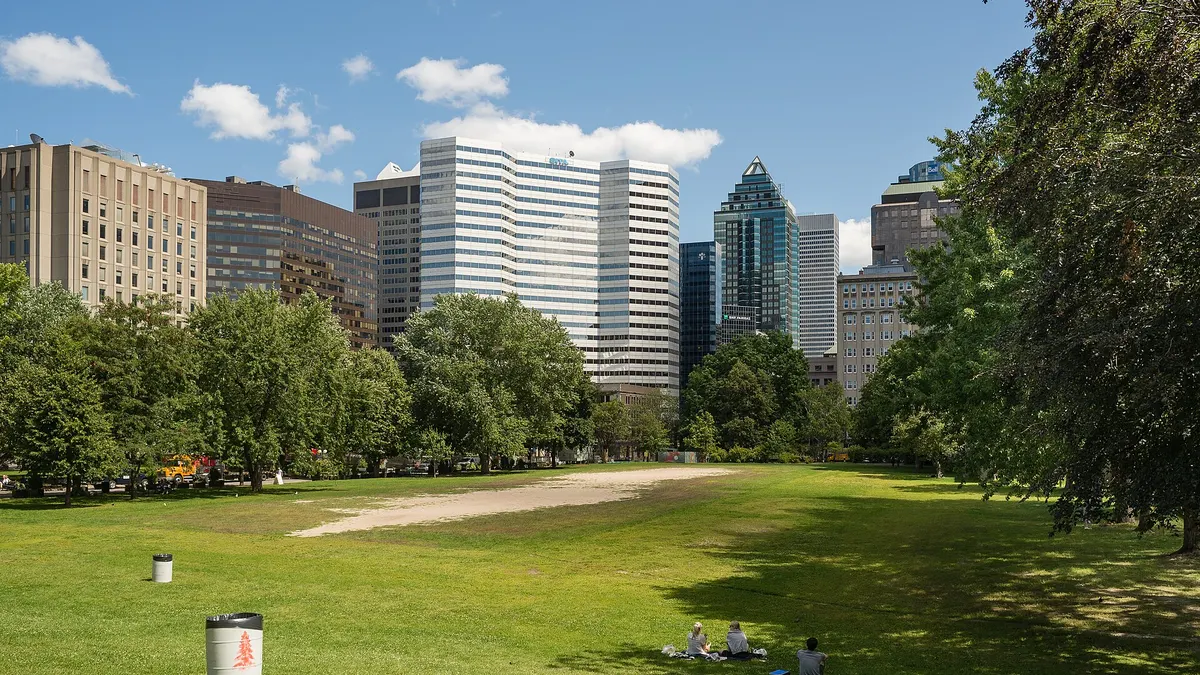
Canada is still one of the best places in the world to study if you want a degree that can lead to work and permanent residence. It is also far harder to get into than it was in 2023. Since 2024 the federal government has capped study permits, raised the money you must show, cut off-campus work, restricted spousal work permits and tied post-graduation work permits to fields of study.
None of that makes Canada a bad choice. It makes it a choice you need to plan properly. A diploma from a private college that is ineligible for a post-graduation work permit is now an expensive mistake in a way it was not five years ago.
This guide is for students applying for the September 2027 or January 2028 intakes, and for parents paying the bills. It covers the caps, attestation letters, how much money you need, tuition, work rules, the PGWP, health insurance and banking.
The short version: master's and PhD students at public universities have the smoothest path. Undergraduate and college students can still get in, but should choose their program with the PGWP rules open in another tab.
In this guide
- The study permit cap in 2026 and 2027
- PAL and TAL: who needs an attestation letter
- How much money you must show
- Tuition fees
- Working while you study
- Post-Graduation Work Permit rules
- Bringing a spouse or children
- Health insurance by province
- Banking, GICs and money transfers
- How to apply, step by step
- Frequently Asked Questions
- Final Thoughts
The study permit cap in 2026 and 2027
For 2026, IRCC planned to issue up to 408,000 study permits: about 155,000 for new students arriving and 253,000 for extensions of students already in Canada. Within that, it accepts a maximum of 309,670 applications for processing from students who need a provincial or territorial attestation letter, expected to produce about 180,000 permits. The gap allows for refusals.
Several groups sit outside the cap. From 1 January 2026, master's and doctoral students at public designated learning institutions (DLIs) are exempt and do not need an attestation letter. Primary and secondary school students are also exempt. Doctoral applicants abroad also got a faster processing standard of about two weeks when they apply with their family.
For 2027, the Immigration Levels Plan sets new international student arrivals at 150,000, slightly lower than 2026. At the time of writing (late 2026), IRCC had not yet published the detailed 2027 application cap or provincial split, which in past years came out around the turn of the year. Expect a similar structure.
PAL and TAL: who needs an attestation letter
A provincial attestation letter (PAL) or territorial attestation letter (TAL) is a document from the province confirming that your place counts against its share of the cap. Your school requests it for you after you accept your offer. You cannot get one yourself.
You need one if you are applying from outside Canada for a college diploma, an undergraduate degree or a program at a private institution. You generally do not need one if you are a master's or PhD student at a public DLI, a school-age child, or extending a study permit at the same school and level.
Provinces share the cap by population, so Ontario and BC get the largest numbers but also have the most applicants. Colleges in particular have run out of PAL spaces early in recent cycles. Accept your offer and pay any deposit as soon as you are sure, because PALs are often issued in order.
How much money you must show
IRCC sets the living-cost requirement by family size. These are the amounts on its proof of financial support page for applications outside Quebec submitted on or after 1 September 2026, in Canadian dollars.
| People (including the student) | Living funds required (CAD) |
|---|---|
| 1 | 23,448 |
| 2 | 29,192 |
| 3 | 35,888 |
| 4 | 43,572 |
| 5 | 49,419 |
| 6 | 55,736 |
| 7 | 62,054 |
| Each person beyond 7 | 6,318 |
This is in addition to your first year's tuition and travel costs. A single undergraduate paying CAD 40,000 in tuition therefore needs to show about CAD 63,500 before flights. Quebec sets its own amounts through the CAQ process.
Accepted proof includes a Canadian guaranteed investment certificate (GIC), a receipt for paid tuition, an education loan from a bank, a scholarship letter, six months of bank statements, or a sponsor's letter with their own financial documents. Officers look closely at where the money came from. A parent's account that jumps from almost nothing to CAD 70,000 a month before you apply is a red flag. Our guide to proof of funds for visa applications covers how to document a sponsor properly.
Tuition fees
Statistics Canada's figures for 2025/2026 put average international undergraduate tuition at CAD 41,746 a year and average international graduate tuition at CAD 24,028. Ontario is the most expensive province for international undergraduates; Newfoundland and Labrador is the cheapest. The ranges below are approximate and vary widely by school and program.
| Program type | Typical annual tuition (CAD, approximate) |
|---|---|
| College certificate or diploma | 15,000 to 22,000 |
| Undergraduate degree, arts and business | 25,000 to 50,000 |
| Undergraduate degree, engineering and computer science | 35,000 to 65,000 |
| Master's degree (course-based) | 18,000 to 45,000 |
| Research master's or PhD | 8,000 to 25,000, often offset by funding |
| MBA | 40,000 to 100,000+ for the full program |
Research degrees are where the real bargains are. Many PhD programs pay a stipend and waive or reduce international fees. If you are aiming for funded study, look at our list of fully funded scholarships before you commit to paying full fees.
Working while you study
Full-time students with a valid study permit can work off campus up to 24 hours a week during academic terms, and without a limit during scheduled breaks such as summer and winter holidays, according to IRCC's off-campus work rules. On-campus work does not count toward the 24 hours.
Be careful with that limit. Working 30 hours a week during term breaches your study permit conditions and can sink a later PGWP or permanent residence application, because IRCC can see your tax records. Part-time work at minimum wage will help with rent and groceries, but it will not cover tuition. Plan your budget as though you will earn nothing in your first semester.
Post-Graduation Work Permit rules
The PGWP is what turns a Canadian education into Canadian work experience, and then possibly permanent residence through the Canadian Experience Class. The rules now include:
- Language: CLB 7 in all four abilities for university degree graduates, CLB 5 for college graduates, tested with an approved test.
- Field of study: graduates of non-degree programs (most college certificates and diplomas) whose study permit application was submitted on or after 1 November 2024 must study in an eligible field linked to long-term shortages. Bachelor's, master's and doctoral graduates are exempt. IRCC froze the list of eligible fields for 2026 rather than updating it.
- Program length: at least eight months. Programs of two years or more, and master's degrees, can lead to a three-year PGWP.
- Excluded schools: most programs at private colleges that deliver a public college's curriculum under licence are ineligible.
- Deadline: apply within 180 days of getting confirmation that you completed your program.
Check that your exact program and CIP code are eligible before you pay a deposit. Our Express Entry guide explains how work on a PGWP converts into permanent residence.
Bringing a spouse or children
Since 21 January 2025, a spouse or common-law partner can only get an open work permit if the student is in a master's program of at least 16 months, a doctoral program, or one of a short list of professional degrees such as medicine, law, dentistry, pharmacy, nursing, education or engineering, or a few named bridging programs.
If you are coming for a one-year master's or a college diploma, your partner can come as a visitor but cannot work. That changes the family budget dramatically. Children can attend school in Canada, but whether you pay international fees for them depends on the province and your program, so ask the local school board before you budget.
Health insurance by province
International students are covered differently in each province, and the rules change, so confirm with your school's international office before you arrive.
- Ontario: not covered by OHIP. Universities enrol students in the University Health Insurance Plan (UHIP); colleges use private plans.
- British Columbia: eligible for the provincial Medical Services Plan after a waiting period, with a monthly fee. Get private cover for the gap.
- Alberta: students with a study permit valid for 12 months or more can usually register for Alberta Health Care Insurance.
- Saskatchewan: students with a valid study permit can generally get provincial coverage.
- Manitoba: not covered provincially; schools run their own compulsory plans.
- Quebec: coverage through RAMQ is limited to students from countries with a social security agreement; others must buy insurance, usually through the university.
Many schools also add a student union health and dental plan, which covers prescriptions and some dental costs. Do not opt out unless you have proven equivalent cover.
Banking, GICs and money transfers
Most students open a Canadian bank account before they arrive by buying a GIC through a participating bank. You deposit the living-cost amount, receive part of it when you land and verify your identity, and the rest in monthly instalments. Expect an administration fee of roughly CAD 100 to 250.
Once in Canada, you will want a no-fee student chequing account, a debit card and, after a few months, a secured or student credit card to start building a credit history. Our guide to opening a bank account in Canada as a newcomer compares the main options. For tuition payments from home, compare specialist transfer services with your bank's wire rate; the difference on a CAD 40,000 payment can be several hundred dollars.
How to apply, step by step
- Choose a DLI and program, checking PGWP eligibility and field-of-study rules.
- Apply to the school and accept your letter of acceptance.
- Wait for the school to request your PAL or TAL, if you need one.
- Arrange your funds: GIC, tuition payment, loan or sponsor documents.
- Take an English or French test if your school or PGWP plans require it.
- Apply online for the study permit with your acceptance letter, PAL, financial proof, study plan and passport.
- Give biometrics and, if asked, complete a medical exam.
- Book flights only after approval, and carry your letter of introduction to the border.
Apply as early as possible, especially for September intakes, when processing times rise in many countries.
Frequently Asked Questions
Is there a study permit cap for 2027?
Yes. The levels plan sets 150,000 new international student arrivals for 2027. The detailed application cap and provincial allocations for 2027 had not been published at the time of writing.
How much money do I need to study in Canada?
For a single student outside Quebec, CAD 23,448 for living costs plus your first year's tuition and travel. With average undergraduate tuition around CAD 41,700, most students need to show CAD 60,000 to 70,000.
Can I work full time as an international student in Canada?
Only during scheduled breaks. During term, off-campus work is limited to 24 hours a week.
Do master's students need a PAL?
Not from 1 January 2026, if they study at a public designated learning institution. Students at private institutions and undergraduate or college students generally still need one.
Can my spouse work in Canada while I study?
Only if you are in a master's program of 16 months or more, a PhD, or an eligible professional program. Otherwise your spouse can visit but not work.
Final Thoughts
Treat the PGWP as part of the program you are buying. A cheaper diploma with no work permit at the end is not a cheaper route to Canada; it is a two-year visit. Public universities and colleges, eligible fields of study and programs long enough for a three-year PGWP give you the most options later.
Show money honestly and early, budget for at least one semester with no job, and keep your study permit conditions clean from day one. The students who struggle in 2027 will mostly be the ones who chose a program because the agent said it was easy.
This guide is general information based on official sources at the time of writing, not legal or financial advice. Immigration rules, fees and processing times change often, so check the official government website or speak to a licensed immigration adviser before you apply. Spotted something out of date? Tell us.