Buying a Home in Canada as a Newcomer: Mortgages, Down Payments and Rules
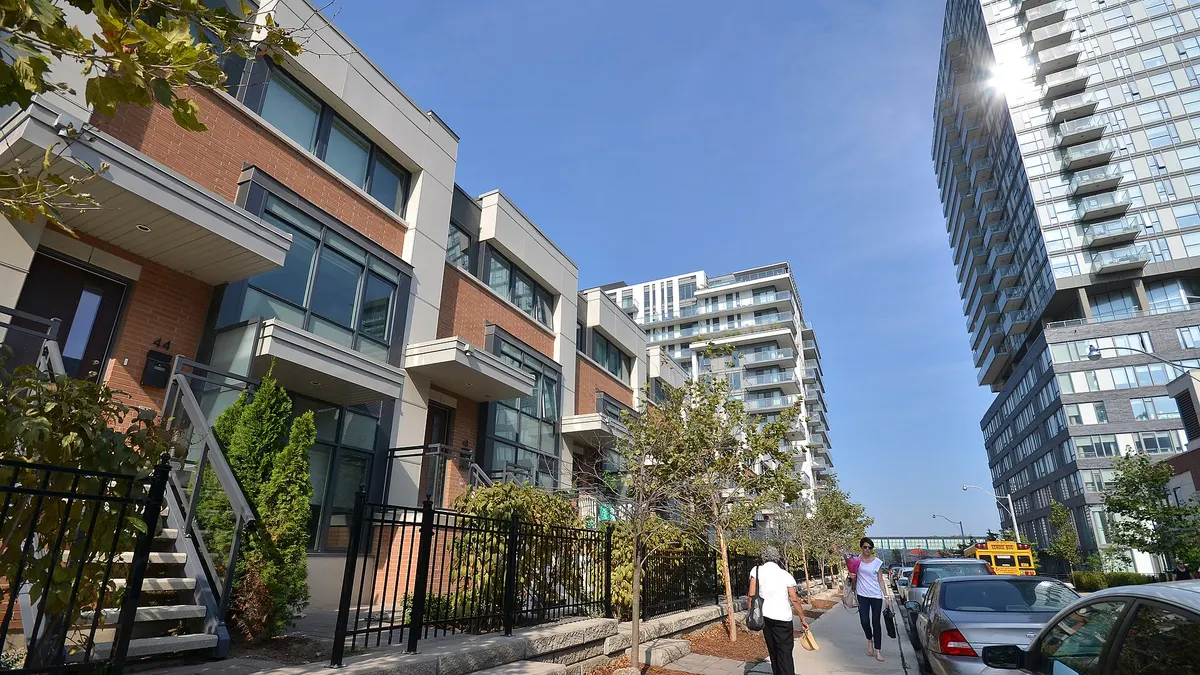
Buying a home in Canada as a newcomer is possible sooner than most people think. Permanent residents can buy on day one with as little as 5% down, and many work permit holders can buy too. What trips people up is not the rules but the paperwork: lenders want to see where every dollar of your down payment came from, and they want proof of income they can verify.
This guide explains the rules as they stand in late 2026: the foreign buyer ban and who it applies to, minimum down payments, mortgage insurance, the stress test, newcomer mortgage programs, the First Home Savings Account, and the closing costs that catch buyers by surprise.
The short answer: if you are a permanent resident with steady income, you can usually get an insured mortgage with 5% to 10% down even without much Canadian credit history. If you are on a work permit, you can buy one home if your permit has enough time left, but expect to need a bigger down payment and to face provincial taxes for foreign nationals in some places.
In this guide
- Can Newcomers Buy Property in Canada?
- Minimum Down Payment Rules
- CMHC Mortgage Insurance
- Amortization: 25 vs 30 Years
- The Stress Test
- Newcomer Mortgage Programs
- Saving Your Down Payment: FHSA and Other Tools
- Closing Costs and Land Transfer Tax
- Steps to Buying Your First Home
- Frequently Asked Questions
- Final Thoughts
Can Newcomers Buy Property in Canada?
It depends on your status.
Permanent residents and citizens can buy anywhere without restriction. You may need to wait a few months for lenders to see stable Canadian income, but there is no legal barrier.
Work permit holders and other temporary residents are covered by the federal Prohibition on the Purchase of Residential Property by Non-Canadians Act, usually called the foreign buyer ban. It was extended in 2024 and runs until 1 January 2027. At the time of writing, the government had not announced whether it will extend, replace or let it lapse, so check for news before you sign anything in early 2027.
Under the current rules, work permit holders are exempt if their permit (or work authorization) has at least 183 days of validity left on the purchase date and they have not bought more than one residential property. Students have a narrower exemption with extra conditions. The ban applies only inside census metropolitan areas and census agglomerations, so rural properties are not covered.
Provinces add their own layers. Ontario charges a 25% Non-Resident Speculation Tax on foreign nationals buying homes anywhere in the province, with some exemptions, including for provincial nominees. British Columbia has its own additional property transfer tax for foreign buyers in specified areas. Ask a local real estate lawyer before you make an offer.
Minimum Down Payment Rules
Your minimum down payment depends on the purchase price. These rules come from the federal government and apply across Canada:
| Purchase price | Minimum down payment |
|---|---|
| $500,000 or less | 5% |
| $500,000 to $1.5 million | 5% of the first $500,000 + 10% of the rest |
| $1.5 million or more | 20% |
Say you buy a $650,000 condo. Your minimum down payment is $25,000 (5% of $500,000) plus $15,000 (10% of $150,000), so $40,000 in total.
The $1.5 million ceiling took effect on 15 December 2024. Before that, anything over $1 million needed 20% down. Lenders can ask for more than the minimum, and newcomers on work permits or with very thin credit files are often asked for 10% to 20%.
CMHC Mortgage Insurance
With less than 20% down, your mortgage must be insured by CMHC, Sagen or Canada Guaranty. You pay a one-time premium, usually added to your mortgage. Typical premiums are:
| Down payment | Premium (% of mortgage) |
|---|---|
| 5% to 9.99% | 4.00% |
| 10% to 14.99% | 3.10% |
| 15% to 19.99% | 2.80% |
First-time buyers who take a 30-year amortization pay an extra 0.20%. In Ontario, Quebec and Manitoba, provincial sales tax is charged on the premium and must be paid in cash at closing, not added to the mortgage.
Using the $650,000 example with $40,000 down, the mortgage is $610,000 and the premium is about $24,400 (4%), or about $25,600 with a 30-year amortization. In Ontario the 8% sales tax on that premium adds roughly $2,000 to your closing costs.
Amortization: 25 vs 30 Years
Since 15 December 2024, first-time buyers can take a 30-year amortization on an insured mortgage, as can anyone buying a newly built home. Before that, insured mortgages were capped at 25 years.
A 30-year term lowers your monthly payment and helps you qualify, but you pay more interest overall and the premium is slightly higher. If you are a newcomer who has never owned a home anywhere in the world, you will usually count as a first-time buyer. If you owned and lived in a home abroad recently, check with your lender, because the definition depends on the program.
The Stress Test
Every federally regulated lender must check that you could still afford the mortgage if rates rose. You must qualify at the higher of 5.25% or your contract rate plus 2 percentage points. OSFI's page on the minimum qualifying rate explains the rule.
Lenders also look at two ratios: housing costs (mortgage, property tax, heating, half of condo fees) should generally stay under about 39% of gross income, and total debt payments under about 44%. If you have a car loan or a large credit card limit, that reduces how much you can borrow.
Newcomer Mortgage Programs
All three mortgage insurers and most big banks have newcomer programs aimed at people who have recently moved to Canada and have limited Canadian credit history. Details vary, but they typically:
- Accept permanent residents who arrived within the last few years, and in some cases work permit holders.
- Allow alternative proof of creditworthiness, such as 12 months of rent or utility payments, or a credit report from your home country.
- Require full-time employment in Canada, often with a probation period completed.
- Allow 5% down for permanent residents with strong files, and ask for 10% or more from work permit holders or those with no Canadian credit at all.
Talk to a mortgage broker as well as your own bank. Brokers can compare several lenders' newcomer programs in one go and are paid by the lender, not by you, on most standard mortgages.
Saving Your Down Payment: FHSA and Other Tools
The First Home Savings Account (FHSA) is the best tool for first-time buyers. You can contribute up to $8,000 a year to a lifetime maximum of $40,000. Contributions are tax-deductible like an RRSP, and withdrawals for a qualifying home are tax-free like a TFSA. You must be a resident of Canada, at least 18, and a first-time buyer. Unused room carries forward only after you open the account, so open one as soon as you have a SIN and file taxes as a resident.
The RRSP Home Buyers' Plan lets you withdraw up to $60,000 from your RRSP for a first home, which you repay over 15 years. You can combine it with the FHSA.
The First-Time Home Buyers' GST Rebate removes the federal GST on newly built homes up to $1 million for eligible first-time buyers, with a partial rebate up to $1.5 million. Ontario has announced a matching provincial rebate on new homes. Check eligibility dates on the Canada Revenue Agency site.
If your down payment comes from abroad, move it early and keep records. Lenders usually want to see 90 days of history in a Canadian account, or a clear paper trail from your foreign account. A gift from family needs a signed gift letter. Our guide to the cheapest way to send money abroad helps with large transfers.
Closing Costs and Land Transfer Tax
Budget for closing costs of roughly 1.5% to 4% of the price on top of your down payment. The biggest is usually land transfer tax.
In Ontario, the provincial tax for a home is 0.5% on the first $55,000, 1% up to $250,000, 1.5% up to $400,000, and 2% up to $2 million. On a $700,000 home that is about $10,475. Toronto charges a matching municipal land transfer tax, roughly doubling it.
First-time buyers get rebates: up to $4,000 from Ontario and up to $4,475 from Toronto. To get the Toronto rebate you must be a citizen or permanent resident, or become one within 18 months. BC has a first-time buyer exemption with its own price limits, and Alberta has no land transfer tax, only small registration fees.
Other closing costs:
- Real estate lawyer or notary: roughly $1,500 to $3,000 including disbursements.
- Home inspection: about $400 to $700.
- Title insurance: a few hundred dollars.
- Property tax and utility adjustments with the seller.
- Home insurance, which your lender requires before closing.
- PST on the mortgage insurance premium in Ontario, Quebec and Manitoba.
Steps to Buying Your First Home
- Build at least six months of Canadian credit history and pay everything on time. See our guide to opening a bank account in Canada for the credit card that starts it.
- Open an FHSA as soon as you can.
- Gather documents: job letter, recent pay stubs, immigration documents, bank statements showing your down payment.
- Get a mortgage pre-approval from a bank or broker. It holds a rate for 90 to 120 days.
- Hire a buyer's agent and a real estate lawyer.
- Make an offer, ideally conditional on financing and inspection.
- Arrange home insurance and close.
Frequently Asked Questions
Can I buy a house in Canada on a work permit?
Usually yes, under the current foreign buyer ban rules, if your permit has at least 183 days left on the purchase date and you buy only one home. Provincial taxes such as Ontario's 25% Non-Resident Speculation Tax may still apply, and the ban's future after 1 January 2027 was not confirmed at the time of writing.
How much do I need for a down payment in Canada?
At least 5% on the first $500,000 and 10% on the portion between $500,000 and $1.5 million. Homes of $1.5 million or more need 20%. Newcomers with thin credit files or on work permits are often asked for more.
Do I need Canadian credit history to get a mortgage?
Not always. Newcomer mortgage programs accept alternatives like rent and utility payment records or a foreign credit report. Still, six to twelve months of Canadian credit makes approval easier and the rate better.
Can newcomers open an FHSA?
Yes, if you are a resident of Canada for tax purposes, at least 18, and a first-time buyer. Permanent residents and many work permit holders qualify once they have a SIN.
What are typical closing costs in Canada?
Plan for 1.5% to 4% of the purchase price. In Toronto, land transfer tax alone can exceed $20,000 on a $700,000 home before first-time buyer rebates.
Final Thoughts
For most newcomers, the smart sequence is rent first, build credit, open an FHSA and buy once your income is stable and your down payment has a clean paper trail. That usually takes one to two years, and it avoids being pushed into a high-rate lender because your file looked thin.
If you are on a work permit, watch the foreign buyer ban closely as 1 January 2027 approaches, and get advice from a real estate lawyer in your province before signing. The federal rules may change, but provincial taxes on foreign buyers are a separate question and can cost far more than the ban ever did.
This guide is general information based on official sources at the time of writing, not legal or financial advice. Immigration rules, fees and processing times change often, so check the official government website or speak to a licensed immigration adviser before you apply. Spotted something out of date? Tell us.